|
|
|
|||
|
A slow sand filter can be used to filter the water used in a pond or fountain.
The result is very clean water.
See a video of the filter in operation here
The pond filter described below is still functioning as of Feb. 4, 2022 after over 11 years of continuous operation (with the exception of freezing in the winter)
2010-07-10: The pond filter has been started.
2010-11-27: The pond filter has been frozen (inoperable) for 5 days and is still frozen; however the pond is mostly thawed out. The filter froze from the outside inward. This has caused the output pipe to stay frozen as it is on the inside of the container within 1/4 inch of the wall - where the filter is still frozen on the inside - rather than outside of the container where the temperature has warmed up to above freezing. The filters with the output pipes on the outside are partially functional now, as those output pipes warm up faster.
2011-01-03: The pond filter has been frozen for 6 days now, as well as the top 2 inches of the pond. Before the freezing weather, water samples went in for testing. We will be looking at the turbidity and numbers of Coliform bacteria in the filter output water. Expect test results about 2 weeks from 2011-01-01.
2011-09-29: The pond filter is still functional. There has been one modification: an overflow pipe that feeds back into the pond has been added to the top of the filter. This allows the water that backs up (as a result of flow reduction due to biofilm density increase) to flow back into the pond rather than spilling out the top of the filter. This prevents water loss by giving extra time to wet harrow the sand surface - when water flows from the overflow pipe its time to wet harrow the sand surface. The little pond pump has seen much abuse - freezing water, running dry (the raccoons actually dragged it out which left it running ouside of the pond over night), and plugging up with muck from the bottom of the pond - and it still is working fine.
2012-05-03: The pond filter is still functional. I am totally amazed that the pump has lasted this long. (I ordered the pump through Amazon. There were reviews from people who said it failed to work at all, or it failed in 2 or three weeks. . . hmmmm. I'll refrain from a rant about stupid people. I'm not going to go off, I'm not going to go off, I'm not going to. . . . ) It has been embeded in frozen water for several days, run dry, run full of muck and sand, and has been completely plugged up for 12 hours at a time - and it is still working. Also, the filter is still working and the water is always crystal clear. There has been very little maintanence on the filter, it just keeps working. I have dumped horribly foul water into the top of the filter and it still keeps producing crystal clear output water. We are now growing watercress in the pond.
2013-01-31: The pond filter is still functional. The pump has been changed to a unit that automatically shuts off if there is no water available. The original pump lasted 2 years. It was deliberately subjected to excessively harsh conditions, running dry for 24 hours at a time during the winter, when the water froze. The original filter has not been changed. It has been wet-harrowed twice in 2 years and frozen solid each winter for 3 winters. A new container has been added, which holds approximately 45 gallons (not including the 35 gallons in the filter at all times).The filter has been frozen for 2 and a half weeks (from January 7 to January 23). It is now running as of January 25, 2013.
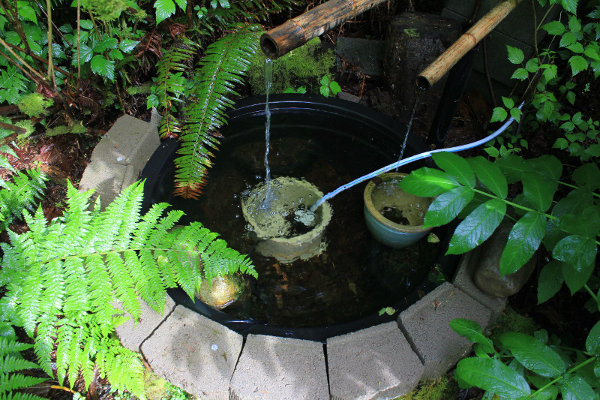
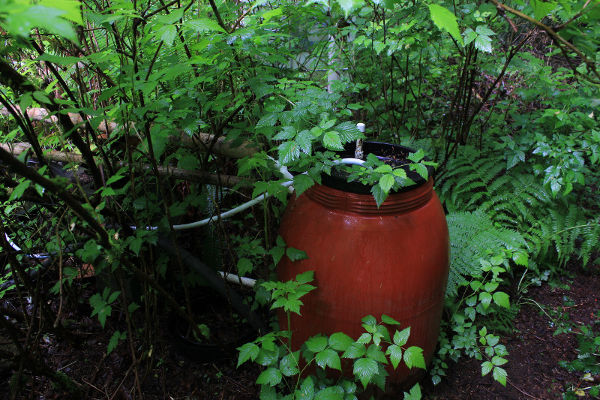
2013-05-23: The pond filter is still functional. No new sand has been added. The pond container has changed, the filter is the same. Algae grew for a while in Feb, and March but now it is gone. I have repeatedly put horrifically foul, stagnant water into the pond. Within a day the water is crystal clear again, with no odor whatsoever. Notice the lack of "foam" in the water, and know that this flow runs 24 hours a day 7 days a week. Foaming is caused from excessive organic material in the water. ( Have you ever looked at a "demo" pond at the hardware store? How long before there is foam and crud in the water, and they have to stop the flow? They obviously don't know about slow sand filters. A demo pond could be run indefinately, with the use of a slow sand filter. No chlorine needed - ever.) The pump now sits inside of a large pot. This keeps sediment and debris out of the pump when the racoons or the neighbor's dogs get into the pond and foul it. It only takes about 10 - 15 hours for the water to clear up after a "critter swimming event" carried out by invaders from the neighbors, or the forest. Note: this pond is in a heavly wooded natural area where there is an enormous amount of debris falling into the pond; and there are a high number of creatures accessing the pond. The bacteria in the filter eats all the nasty stuff. We're coming up on 2 and a half years with little or no maintanence - the system is allowed to freeze in the winter. There are two pipes one is water that has flowed through the slow sand filter, the larger of the two is an overflow pipe. The overflow pipe simply allows the water that does not flow through the slow sand filter to return to the pond. There is a necessary delay of flow through a biological sand filter because the biofilm needs time to eat the nasty bugs; and this overflow pipe eliminates the need for an input flow control, the excess gallons per hour just flow right back into the pond and splash more oxygen into the water. No special flow control devices are needed. See images below:
2014-01-14: The pond filter is still functional after 3 and a half years. The water is crystal clear. The pump and the pond container have been changed once. The filter has not been changed; it is the same filter we started with 3 and a half years ago. No new sand has been added to the filter; the sand has not been changed. The surface of the sand has been wet-harrowed once in the past 6 months. Every 3 or 4 weeks the pump is given a quick cleaning by removing algae and twigs from the input screen, this takes all of 2 minutes. Some foul smelling, stagnant water was added this summer which was cleaned up by the filtration process in 1 day. In December (last month) the filter and pond froze solid.
2014-12-23:The pond filter is still functional. The sand has not been changed. The filter is the same one we started with 4 and a half years ago. The filter froze up last month (November) for 10 days, and half of the water was gone. The temperatures were in the low 20s at night, and near freezing during the daytime. Since then, rainfall has filled the pond back up partially. We have added unfiltered water in addition to the rainfall. The pond water is perfectly clear now as of Dec 23. The freezing did not harm the pump, or the pipes to and from the pond.
2015-02-13:The pond filter is still functional. The sand has not been changed. The water continues to be crystal clear, and the filter runs 24/7.
2015-06-09:The pond filter is still functional, and has been running since August 2010. The sand has not been changed. The pump motor has been changed once. The filter and pond freeze solid every winter. The water continues to be crystal clear, and the filter runs 24/7. Algae appears in Feburary, and March and is gone by the end of April. The filter has been wet-harrowed once this year.
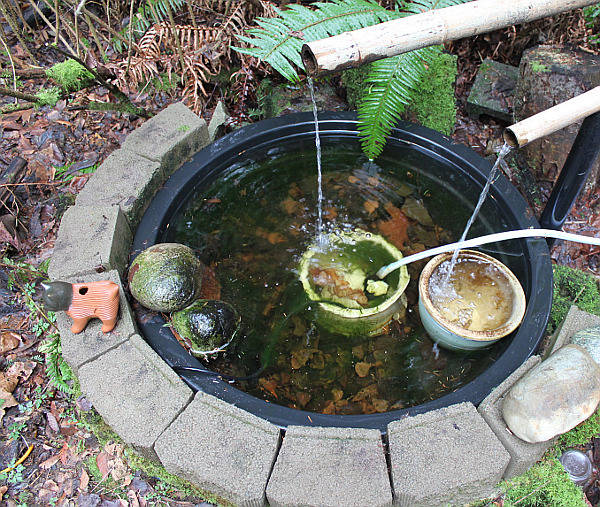
the above image is as of January 14, 2014
The three images below were taken May 23, 2013
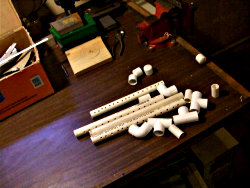
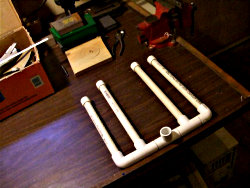
 Drill holes in the drain pipes with a no.10 bit |
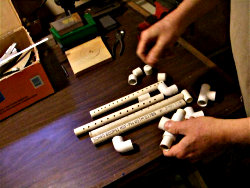
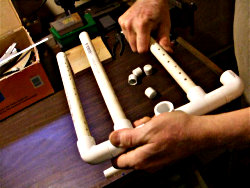
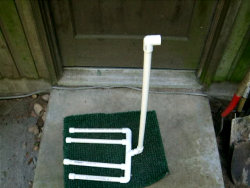
 Assemble the drain pipe system |
 |
 |
 |
 |
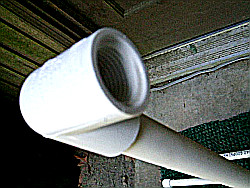 The 90 on the output is threaded on the top end |
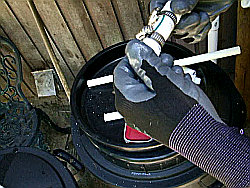 A flexible connection using garden hose and pipe clamps is necessary using a 1/2 inch threaded adapter on each end with pipe clamps to secure them. A 1/2 inch threaded adapter will screw into 5/8 inch od hose on a warm day |
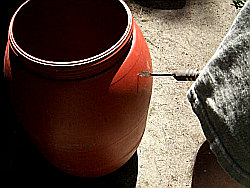 Use a 3/4 inch spade bit to drill the hole |
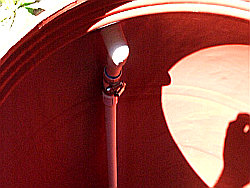 |
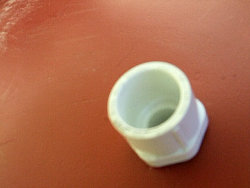 The threaded adapter will "thread" the the hole made by the 3/4 inch bit Then the adapter is loosened and screwed into the 90 at the same time it is re-threaded back into the threads it made in the barrell |
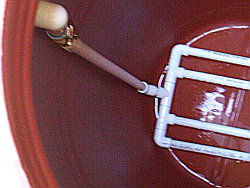 |
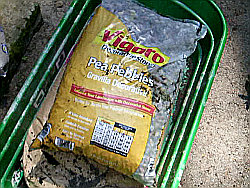 |
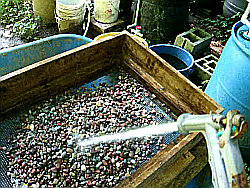 Wash the pea gravel until the water runs clear |
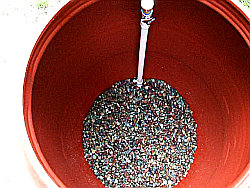 The pea gravel should cover the drain pipes by about 1 inch |
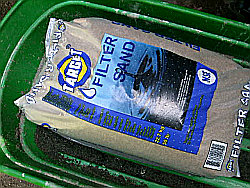 Washed nsf 61 approved filter sand is used. Available at hardware stores "Target" filter sand website |
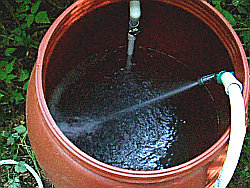 Fill the barrel with water BEFORE you add sand - prevents air bubbles See Note below |
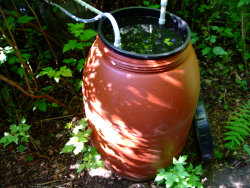 Finished filter in operation.(The reflection on top is rain water) |
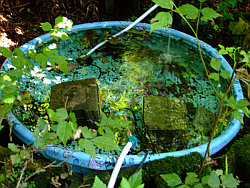 Filtered pond This test pond has raccoons,birds, and squirrels, using it. This is six weeks of use. Without the filter this water would be stagnant and filled with bad bacteria. It holds 118 litres of water. |
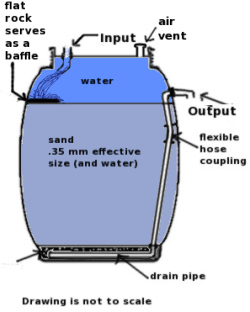 |
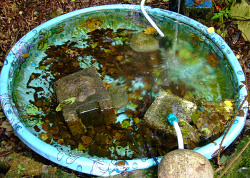 This is the Filtered pond test pond at its 14th week since filling. Still clear. Still 118 liters |
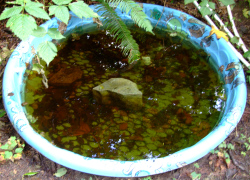 Unfiltered pond As of 2010-10-01 This test pond has been filled by rain water since 2010-08-01 It contains 212 litres of water and there is no filter circulating the water. (this is a different pond container than the above pictures and it is 100 feet to the north of the filtered pond in a similar setting |
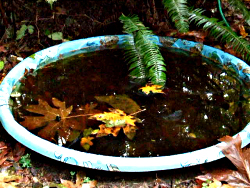 Unfiltered pond This is the unfiltered water at week 12: Oct 31 2010 slightly over 275 litres now because of rainfall This pond will need to be emptied, as it is a hazard because of mosquitoes. |
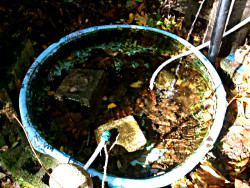 Filtered pond This is the test pond with the filtered water at week 17: Oct 31 2010. Still clear, still 118 liters. No mosquitoes. The leaves at the bottom are visible because the water is clear |
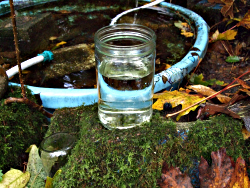 This is the Filtered pond water week 17, Oct 31 2010 As of 2010-11-07, three 4 inch goldfish were put into the above pictured pond. |
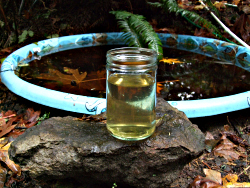 This is the Unfiltered pond water week 12, Oct 31 2010 |
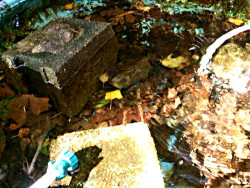 Closeup of the Filtered pond as of 2010-10-31 Note the waterline on the brick. |
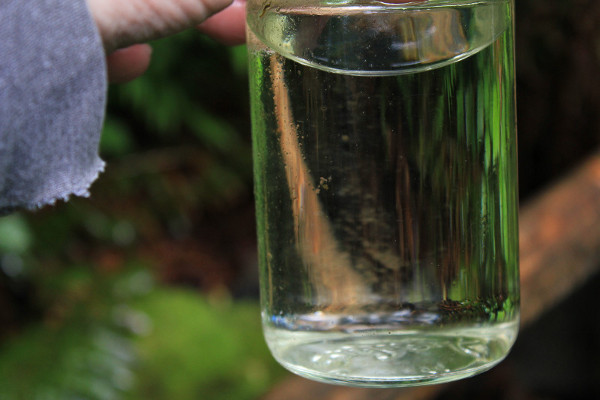
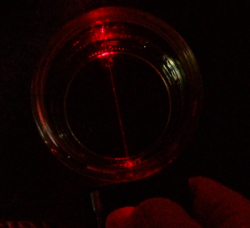 This is the Filtered pond water laser reflection 2010-11-04 This is water directly from the pond |
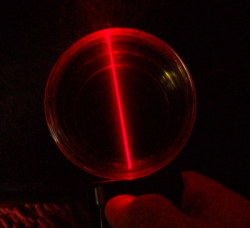 This is the Unfiltered pond water laser reflection closeup 2010-11-04 |
In the images to the left The lasers show relative turbidity; a brighter line indicates more solids in the water sample. The unfiltered water is heavily contaminated with solids. The same laser, the same camera the same settings, and the same lighting were used on all images. All of the containers are the same type of commercial food jars The images were resized - no other processing was done.Compare these to the four different commercial bottled water samples below. |
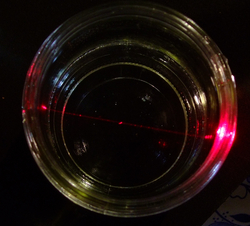 bottled water |
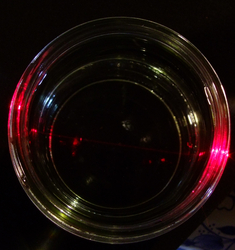 bottled water |
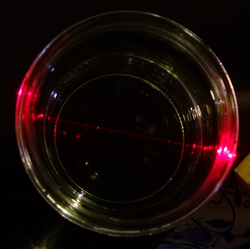 bottled water |
 bottled water |
Note Air bubbles in a slow sand filter will cause the "good" bacteria to die and decompose - thus fouling the entire filter and causing horrible odors and nasty anaerobic bacteria to grow resulting in the need to completely clean the sand and gravel and sterilize it also. It's a reall mess if it happens - trust me - you don't want air bubbles in a slow sand filter. Filling it with water first does two things: it lets you check for leaks before you have put (in this case) 400 plus pounds of sand in and keeps air pockets from forming in the sand as it is added. I've been through this already with a much larger filter and had to shovel out 1000 lbs of sand and sterilize it amdist the foul odor. Very unpleasant indeed. An ounce of prevention would have been worth a ton of cure! (I had to shovel the 1000 lbs of sand 2 extra times: once out (to clean it), and then back in again)
Page design by Perpetual PC's

This work is licensed under a Creative Commons Attribution Share Alike 3.0. terms of use
